
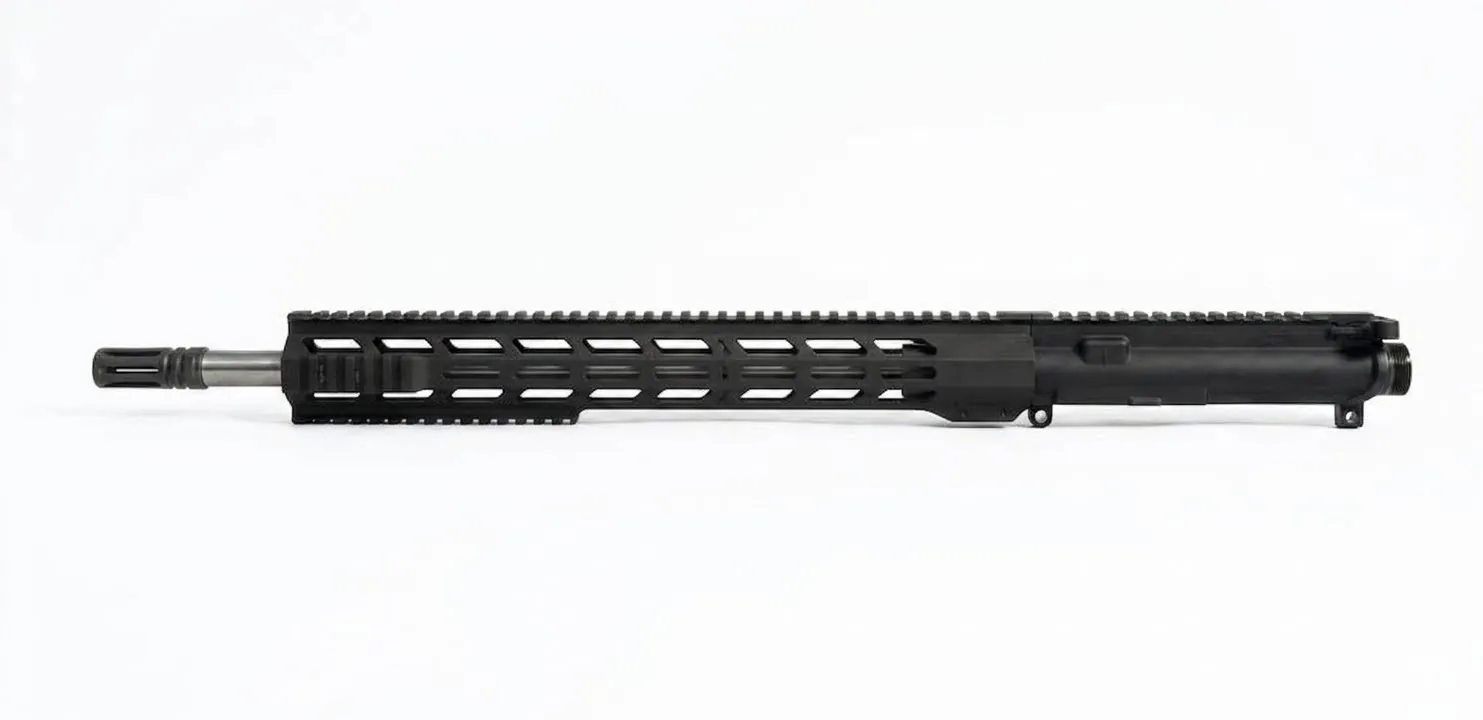
The best AR-15 upper is not the one with the longest feature list. It is the one that gives the finished rifle a clear job and a coherent set of parts to do it. A complete upper can be a practical starting point because it brings the receiver, barrel, handguard, gas-system components, and often the bolt carrier group together as a defined package. The right choice still depends on the cartridge, the distances and conditions you expect to encounter, the lower and sighting equipment you will use, and whether the rifle has a broad role or a specific competition purpose.
The short answer
For most buyers, the best AR-15 upper is a complete upper with a plainly stated barrel, chamber, gas system, handguard, and included components. Start with the role of the rifle, then compare complete configurations that support that role. A compact field or general-purpose setup may call for different choices than a high-power competition rifle. The goal is not to collect specifications. It is to select an upper that makes sense with the rest of the rifle.
A complete upper also gives a buyer a cleaner conversation with the builder. Instead of asking whether one loose part is popular, you can ask whether the barrel length, chamber, bolt carrier group, handguard, optic, stock, magazines, and expected use belong together. That is a much more useful way to purchase a rifle that will remain satisfying after the first range visit.
What a complete upper actually solves
An AR-15 upper is more than the visible receiver. In a complete configuration, the barrel, handguard, gas-system components, and often the bolt carrier group have already been selected around one intended package. The exact contents vary by product, so buyers should read every listing instead of assuming that all complete uppers include the same charging handle, muzzle device, bolt carrier group, or supporting hardware.
That distinction matters because a complete upper removes some of the guesswork without removing the need for judgment. The buyer still needs to confirm the chambering, barrel length, twist rate, handguard length, and what the listing says is included. The upper must also be considered with the lower, stock, trigger, optic or sights, magazines, sling, and any support gear that will become part of the finished rifle.
A product description should make those choices easy to inspect. DRD's AR-Tactical Upper, for example, is listed with a .223 Wylde chamber, 22-inch Satern cut barrel, 1:7 twist, 15-inch free-float handguard, low-profile gas block, and complete bolt carrier group. Those are useful facts because they describe a competition-focused upper as a configuration, not as a vague collection of upgrades.
Choose the rifle's role before the upper
The first question is not which upper is best in the abstract. It is what the finished rifle needs to do most often. A buyer who wants a practical, broad-use rifle has different priorities from a shooter preparing for high-power competition or a field-focused cartridge choice. The best choice should make ordinary use easier, not merely impress on a product page.
Start by naming the real conditions. Consider normal distances, expected shooting positions, the kind of sights or optic you want to use, how the rifle will be carried and stored, and whether an established competition rulebook applies. Those answers narrow the field quickly. They also keep a buyer from choosing a highly specialized upper because one feature sounds impressive in isolation.
Competition creates a clear example. A high-power or service-rifle setup may be shaped by the current rules, target distances, firing positions, and sighting requirements of a specific program. The CMP rulebook library and NRA competition rulebooks are better starting points than an old forum post when a rifle needs to fit a defined discipline. The rulebook tells the buyer what the event requires. The product listing then shows whether a particular upper supports that purpose.
Start with the cartridge and chamber
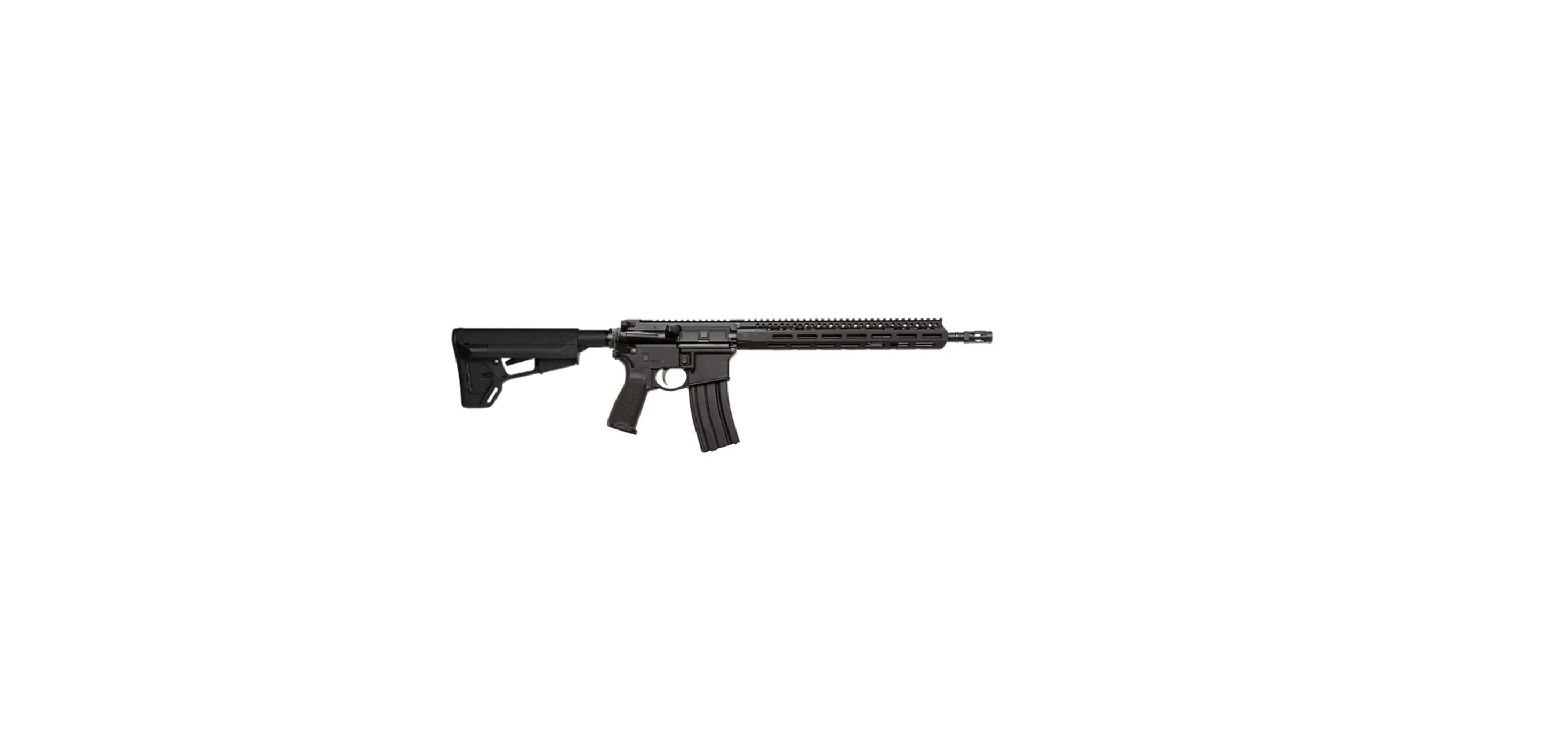
The cartridge and chamber are foundational because they shape the barrel, bolt, magazines, and the rest of the upper's purpose. They should be read exactly as listed, never assumed from the rifle's appearance. A product page that names the chamber and barrel clearly gives the buyer a concrete basis for evaluating what the upper is designed to support.
For .223 Wylde and 5.56 NATO questions, the barrel marking and the manufacturer's guidance are the important references. DRD's .223 Wylde versus 5.56 NATO guide explains why chamber markings matter and why a buyer should not treat them as interchangeable labels. The SAAMI firearms and ammunition FAQ likewise emphasizes that ammunition and firearm compatibility should follow the marking and manufacturer information, especially when a marking is unknown or unclear.
Other cartridge choices create their own complete-system questions. A field-oriented upper may use a different bolt and magazine arrangement than a .223 or 5.56 setup. That is not a detail to fill in later from a parts list. It is a reason to purchase a clearly defined upper and to make the lower, magazines, optic, and intended use part of the same decision.
Barrel length is a handling decision, not a quality score
Barrel length is one of the first specifications buyers notice, but it is not a simple better-or-worse scale. A 16-inch configuration is often valued for broad handling and a compact overall package. Longer barrels can make sense when the intended role calls for a more specialized format, including certain field or competition applications. The better question is whether the length works with the chamber, gas system, handguard, optic plan, and the way the rifle will actually be used.
The DRD AR-15 barrel-length guide compares 16-, 18-, and 20-inch formats around practical handling, sighting, and competition use. It is useful because it keeps the decision tied to the whole rifle. A longer barrel does not certify accuracy by itself, and a compact barrel does not make a configuration automatically more useful. Barrel quality, chamber, ammunition, sighting system, support, and shooter all remain part of the result.
A buyer should also read barrel profile and twist rate in context. A listed 1:7 or 1:8 twist tells you something useful about the barrel, but it does not settle every ammunition or use-case question. Use the AR-15 twist-rate guide alongside the product specification, then confirm the manufacturer's guidance before making an order decision around one number.
Gas system and barrel belong in the same conversation
The gas-system label is another detail that can be useful without becoming a shortcut. It describes part of the upper's operating layout, and it belongs beside the barrel length, chamber, carrier, buffer system, ammunition, and overall configuration. A complete upper is valuable because these decisions have already been made as a group rather than left to the buyer to reconcile one at a time.
DRD's carbine versus mid-length gas-system guide explains why a gas-system label should be compared alongside the complete barrel and intended role. The same general principle applies to any upper purchase: use the listing to understand the package, but do not use a generic chart to diagnose or alter a firearm. If an existing rifle has a function concern, the manufacturer or a qualified gunsmith should inspect the actual configuration.
The Ballistic Advantage overview of AR gas-system lengths also frames the comparison around barrel length and application rather than a one-size-fits-all answer. That is the right buying mindset. A clear upper specification helps a buyer compare products. It does not replace professional guidance on a rifle that needs service or modification.
Handguard, rail space, and the finished rifle
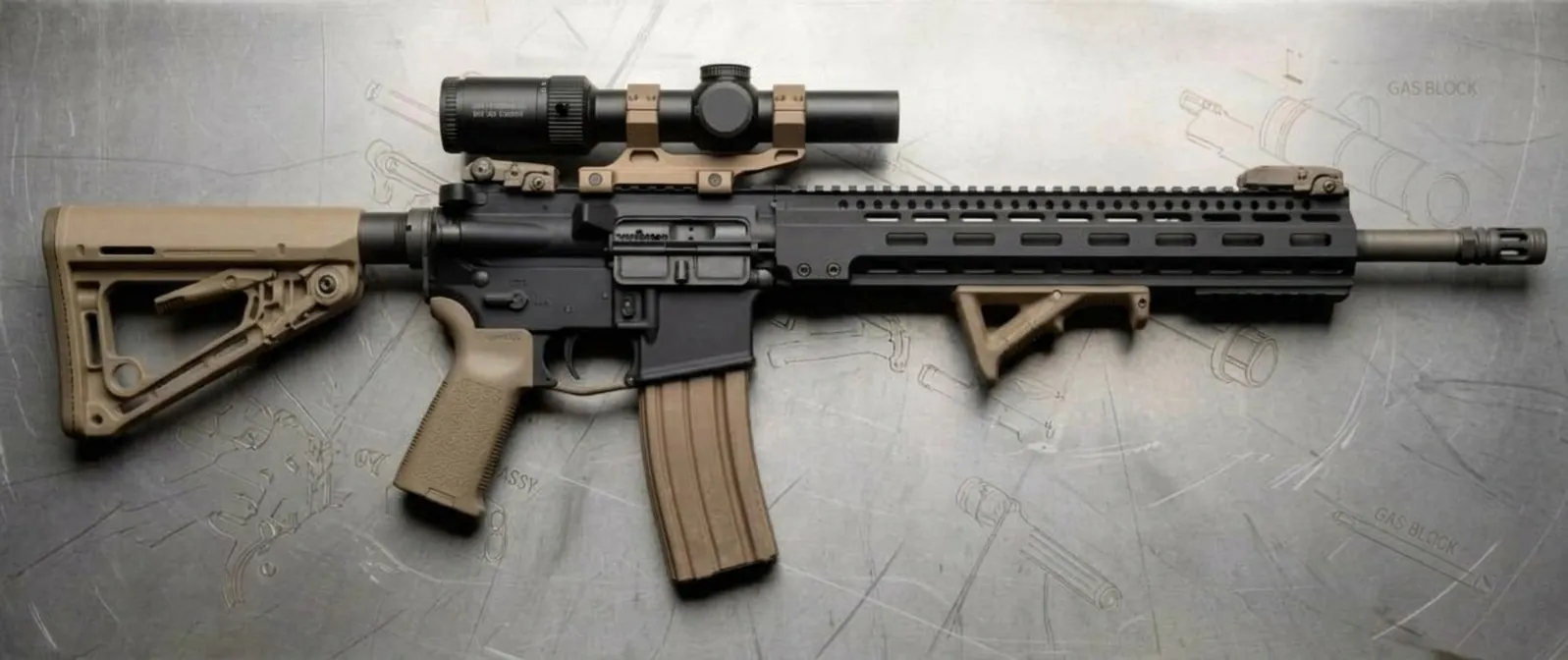
A handguard has a real job: it shapes the front of the rifle, protects the barrel area, and can provide useful mounting space. The length, attachment system, and overall profile should support the way the rifle will be held, carried, and equipped. More open rail space is not automatically more useful, and a longer handguard is not automatically better for every shooter or role.
Look at the handguard with the rest of the setup in mind. An optic affects balance and eye position. A sling and its mounting points affect carry. Any support equipment changes the weight and the way the rifle presents. A buyer who adds equipment only because the mounting space is available can end up with a cluttered, awkward rifle. A better approach is to identify what the rifle truly needs, then choose an upper that provides a practical foundation for those items.
The same discipline applies to the muzzle end, charging handle, and other listed features. They deserve attention when they solve a real problem for the intended use. They are not a replacement for selecting the right cartridge, barrel, and overall configuration in the first place.
Read the included components line by line
Before buying a complete upper, read the product listing slowly. Confirm the chambering, barrel length, twist rate, gas-system description, handguard, bolt carrier group, charging handle, and anything the seller identifies as included or not included. Do not rely on a product photo to answer those questions. A photo can show the broad shape of an upper, but it cannot reliably establish every internal or accessory detail.
That review also helps buyers compare price fairly. Two uppers may look similar at a glance while offering different barrels, bolt carrier groups, handguards, or levels of assembly and support. A lower price can be sensible when the specifications fit the need. It is not automatically the better value when important components are absent, unclear, or selected for a different role.
When something in a listing is not clear, ask before checkout. It is faster to confirm the included configuration than to purchase around an assumption. That matters especially when the upper is intended to pair with an existing lower, optic, magazine supply, or a specific competition plan.
Complete upper versus complete rifle
A complete upper can be a strong option for a buyer who already has a known, compatible lower and wants to shape the rest of the rifle around equipment they understand. It gives that owner a defined upper configuration while preserving the familiar stock, trigger, and lower setup they already use. The key word is known. The buyer should be clear about what lower and supporting equipment the upper will be paired with before ordering.
A complete rifle can be the better choice when the buyer wants the entire configuration selected around one job. It removes more decisions from the process and gives the builder more control over how the stock, trigger, upper, sights, and handling characteristics work together. That can be particularly valuable when the buyer does not already own a lower they intend to retain or when the role is specialized.
Neither route is automatically superior. The right route is the one that produces a complete, supportable rifle without forcing the buyer into a string of after-the-fact corrections. A clear upper can be ideal for the prepared owner. A complete rifle can be the more direct answer for someone starting with a purpose rather than a collection of parts.
Compare three kinds of configurations honestly
One way to make the choice more concrete is to compare the purpose behind the listing. DRD's DRD-15 3-Gun Rifle is listed as a 16-inch .223 Wylde configuration with a mid-length gas system, M-LOK handguard, adjustable stock, and two-stage trigger. It is a useful example of a package selected around a fast-moving competition environment. The lesson is not that every buyer should copy that configuration. It is that the parts have a shared job.
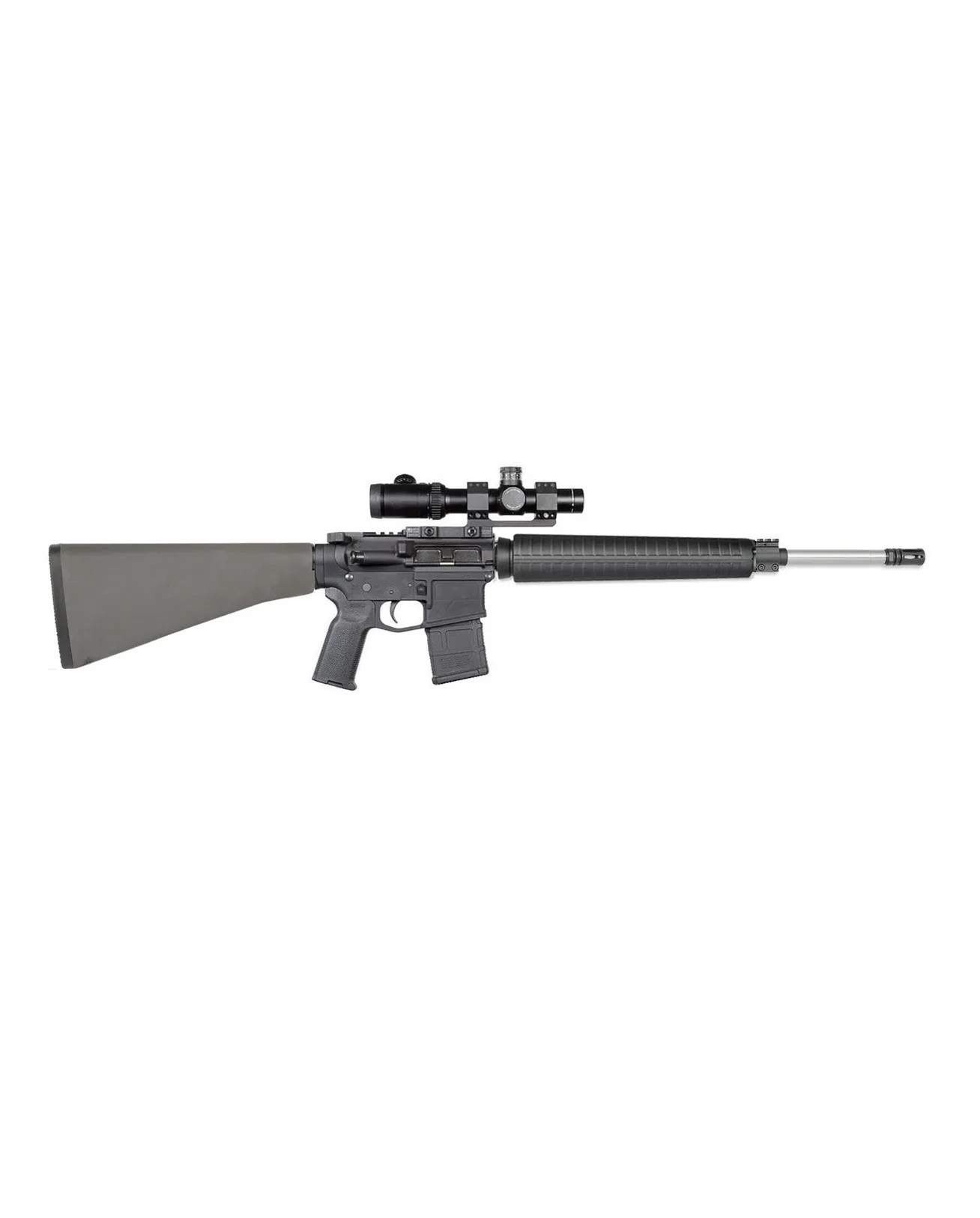
The DRD AR-Tactical Upper is a different example. Its 22-inch .223 Wylde barrel, 1:7 twist, free-float handguard, and full bolt carrier group speak to a more specialized competition conversation. Someone who wants that kind of rifle should compare the current event requirements and their preferred sighting system before treating the upper as a universal recommendation.
For a buyer looking toward a field-oriented 6.5 Grendel configuration, the DRD 6.5 Grendel Upper page shows how a defined upper can be considered with the lower, stock, trigger, optic, magazines, sling, and support gear that will complete the rifle. The cartridge, 16-inch barrel, bolt, gas system, and handguard establish a different set of questions from a .223 Wylde competition upper. That is exactly why the best AR-15 upper is always tied to the job.
Buying mistakes that create expensive second guesses
The most common mistake is selecting an upper around one impressive phrase in a product listing. Buyers may focus on a barrel length, a rail style, a twist rate, or a single component while ignoring the purpose of the whole rifle. That approach can leave the buyer with an upper that is technically interesting but poorly suited to the lower, optic, magazine plan, or actual use.
Another mistake is treating a complete upper as a universal compatibility promise. A complete upper may solve the core upper assembly, but it does not erase questions about the lower, stock system, optics, magazines, local requirements, or existing accessories. Read the product description, ask the seller when a detail is unclear, and do not force unrelated parts together because they happen to share an AR-platform label.
Finally, do not use a shopping decision to diagnose a firearm concern. If an existing rifle has a cycling, wear, or safety question, contact the manufacturer or a qualified gunsmith. A different upper, buffer, or accessory should not be ordered as a substitute for examining the actual rifle. Safe handling and professional evaluation belong ahead of assumptions.
How DRD helps narrow the right upper
DRD is most useful when the conversation begins with the finished rifle, not an isolated part. The company can help buyers compare the cartridge, barrel, upper configuration, lower, stock, trigger, optic, magazines, sling, and intended use that make the setup practical. That is a better path than trying to turn a product filter into a complete build plan.
Browse the competition rifle selection, tactical rifle selection, and hunting rifle selection to see the different jobs a complete configuration can serve. When an existing lower or a specific use case changes the decision, the DRD contact page is the right place to share the details before ordering.
Bottom line
The best AR-15 upper is a complete, clearly specified upper that matches the rifle's intended job. Compare the chamber, barrel, twist rate, gas system, handguard, included components, lower, optic plan, and real-world use together. A broad-use 16-inch rifle, a field-oriented cartridge choice, and a competition upper can all be excellent answers when the configuration fits the purpose.
Choose the role first, read the specifications carefully, and ask the builder when a compatibility or included-component question remains. That keeps the purchase focused on a complete rifle that works together, rather than a series of expensive guesses.
Frequently asked questions
What is the best AR-15 upper for a first build?
The best first upper is a complete, clearly specified upper that fits the cartridge, barrel length, intended use, and compatible lower you already have or plan to use. A buyer should prioritize a coherent configuration over a long list of isolated features, then confirm the exact product details with the seller or builder before ordering.
What should a complete AR-15 upper include?
A complete upper is commonly sold with an assembled upper receiver, barrel, handguard, gas-system components, and bolt carrier group, but the exact contents vary by listing. Read the product specifications carefully and confirm what is included, especially the bolt carrier group, charging handle, muzzle device, and any accessories that affect the finished rifle.
Is a complete upper better than building one from parts?
For many buyers, a complete upper offers a clearer path because the core upper components are selected and assembled as one package. A parts-based project can make sense when a buyer has a specific, informed requirement, but it creates more compatibility and support questions. There is no benefit in adding complexity when a finished upper already fits the intended role.
How do I choose between a 16-inch and longer AR-15 upper?
Start with the role of the finished rifle. A 16-inch configuration is often chosen for broad handling and versatility, while longer configurations can make sense for a more specialized field or competition role. Barrel length is only one decision, so compare it alongside the chamber, twist rate, gas system, handguard, optic plan, and the way the rifle will actually be used.
Can DRD help me choose an AR-15 upper?
Yes. DRD can help buyers compare the cartridge, barrel, gas system, handguard, lower, stock, optic, magazines, and intended use that shape the complete rifle. A short conversation before ordering is often the fastest way to avoid buying a configuration that looks right on a spec sheet but does not fit the actual job.
Related posts
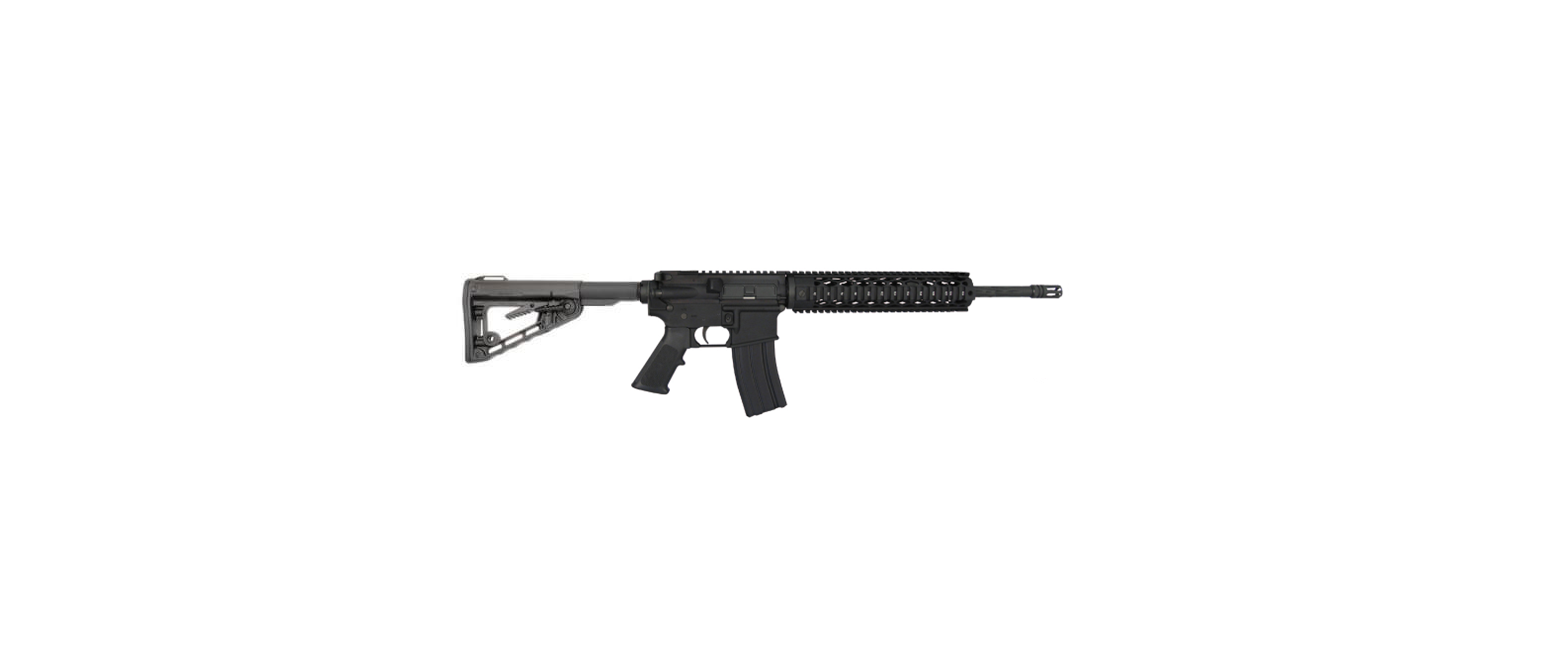
AR-15 Barrel Length: 16 vs. 18 vs. 20 Inches
Compare 16-, 18-, and 20-inch AR-15 barrels for handling, velocity, and competition use before choosing a rifle.
Read the guide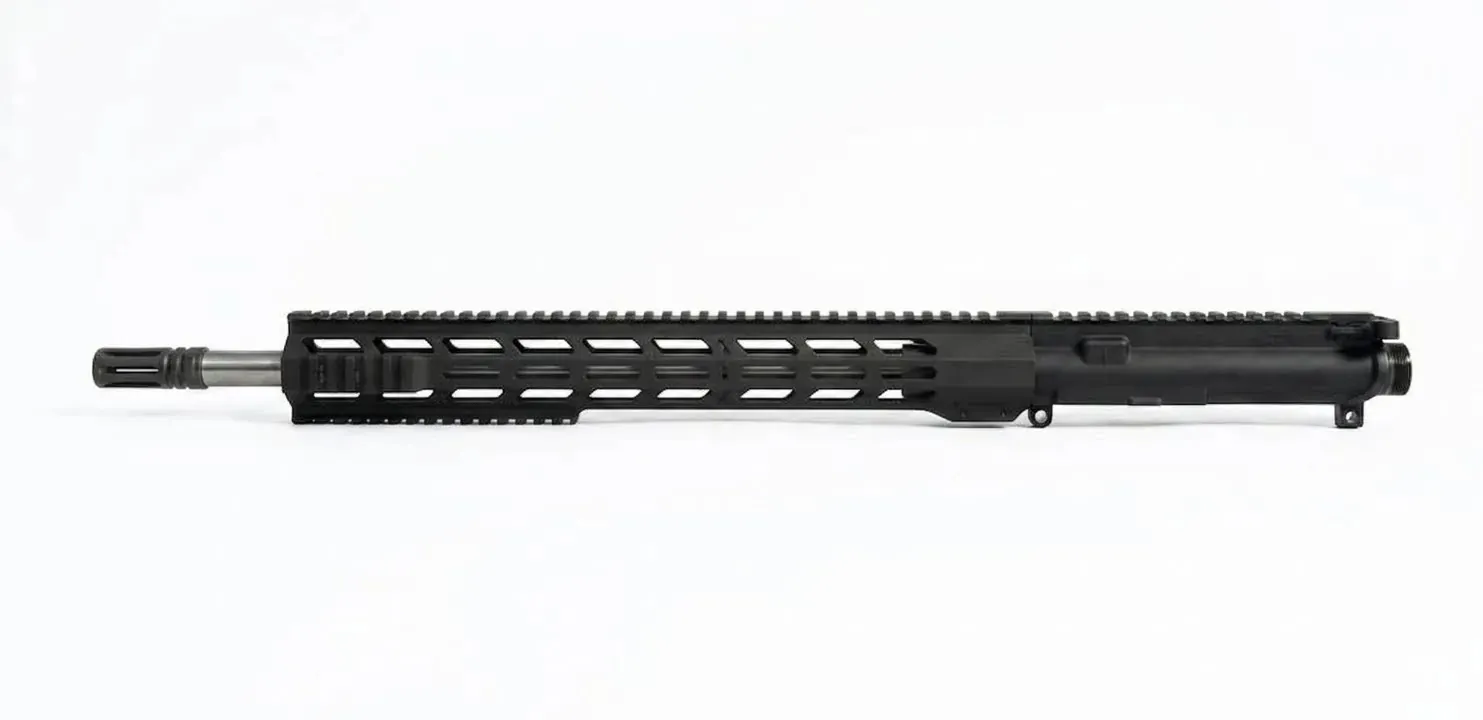
Carbine vs. Mid‑Length Gas System: How to Choose
Carbine vs. mid-length gas system for a 16-inch AR-15: what each label means and the full rifle details to compare before you buy.
Read the guide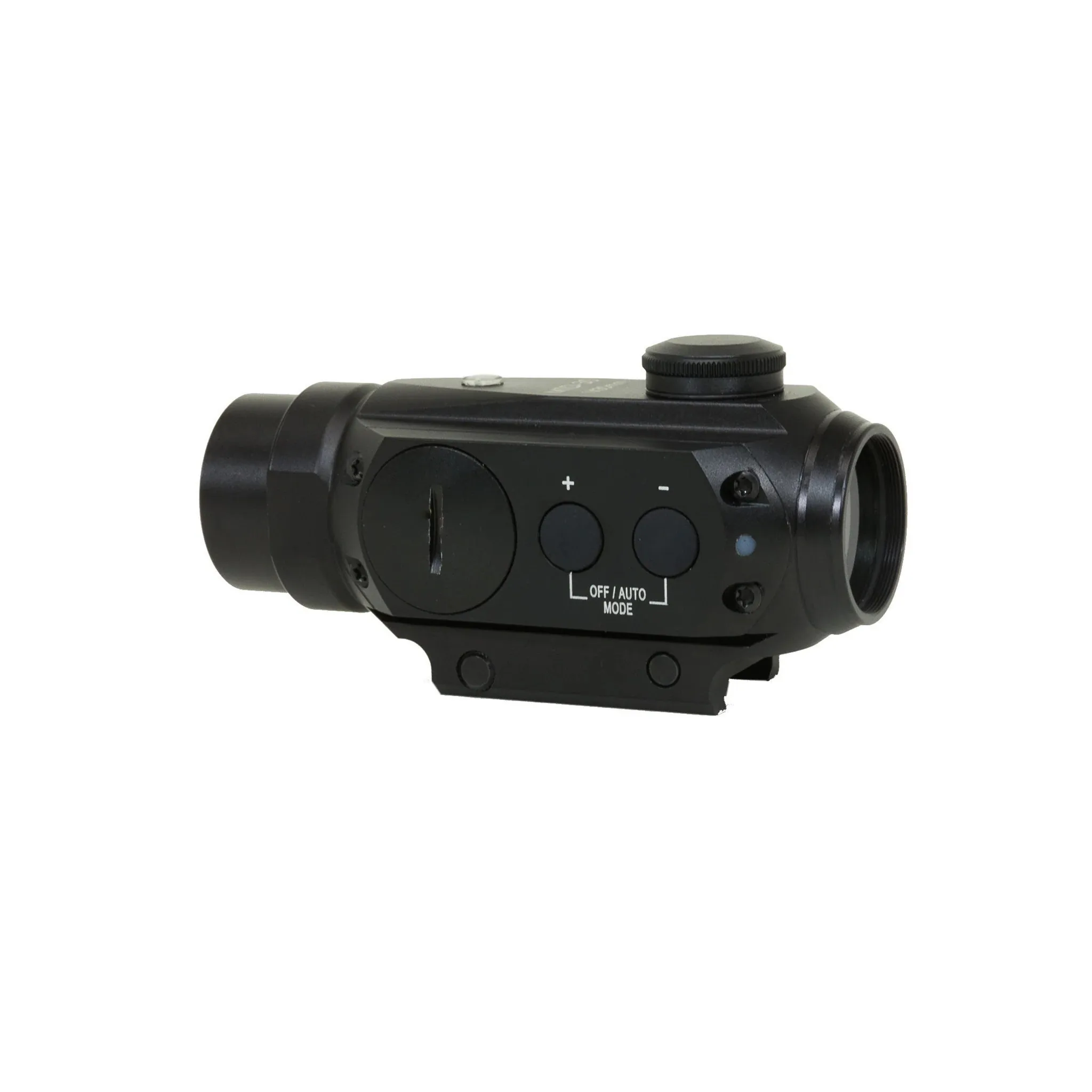
Best Scope for an AR-15: A Practical Buying Guide
Compare red dots, low-power variable scopes, and service-rifle optics around distance, shooting role, and the complete AR-15 setup.
Read the guide