
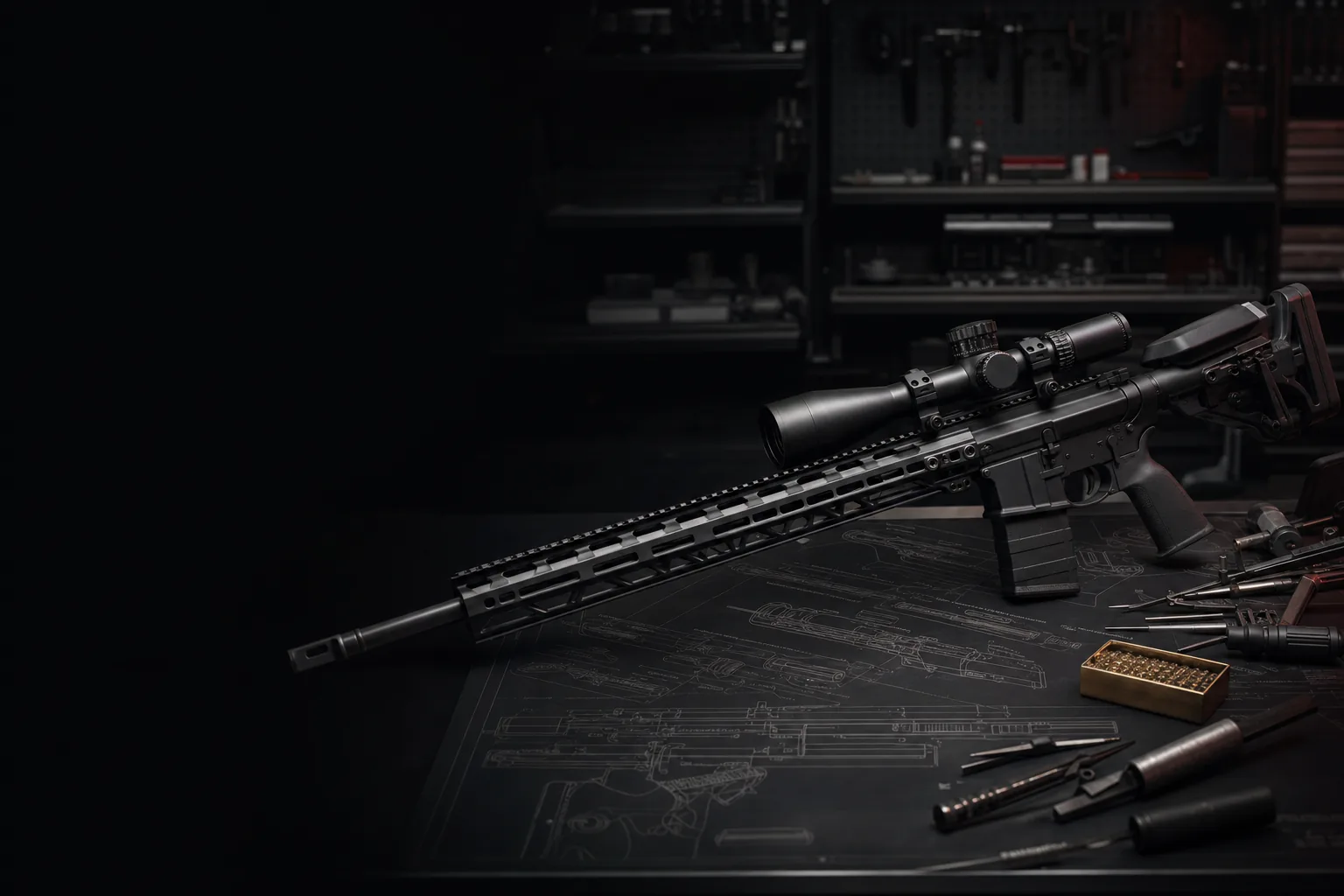
An AR-15 buffer-weight label looks simple until a buyer tries to use it as a shortcut. A standard buffer, H, H2, or H3 tells you something about a part inside the receiver extension. It does not, by itself, tell you whether a rifle will be reliable, pleasant to shoot, or right for a particular use. The better question is whether the complete rifle has been designed around its barrel, gas system, carrier, spring, stock, ammunition, and intended role.
The short answer
Carbine buffers are commonly grouped by nominal weight. A standard carbine buffer is often around 3.0 ounces. Common H, H2, and H3 formats are often listed around 3.8, 4.7, and 5.4 ounces. Manufacturers can use different materials and constructions, so those numbers are a starting point, not an interchangeable specification. Check the actual product listing before comparing parts.
Buffer weight is one part of the operating system. It works with the action spring, carrier, barrel and gas-system setup, ammunition, magazine, and condition of the rifle. A heavier label is not a universal upgrade, and a chart cannot diagnose cycling or wear. If a rifle is not functioning as expected, or if you are considering a change to its operating parts, the manufacturer or a qualified gunsmith should evaluate the whole configuration.
The Ballistic Advantage overview of gas-system lengths is useful context because it shows why a single specification rarely explains how an AR-platform rifle behaves. The same principle applies here: a part makes sense when it belongs to a complete, compatible package.
AR-15 buffer weight chart
| Common label | Typical nominal weight | What the label usually means | What to verify before comparing |
|---|---|---|---|
| Standard carbine | About 3.0 oz. | A common starting format for carbine receiver extensions. | The actual buffer, action spring, complete upper, ammunition plan, and the rifle maker's guidance. |
| H | About 3.8 oz. | A commonly used heavier carbine-buffer format. | The manufacturer's stated part weight and whether the complete rifle was designed around that operating setup. |
| H2 | About 4.7 oz. | A format typically heavier than H. | The specific rifle, barrel and gas configuration, carrier, spring, normal ammunition, and any manufacturer recommendation. |
| H3 | About 5.4 oz. | A format typically heavier than H2. | Whether a qualified professional has identified a real reason for the change instead of relying on a generic parts chart. |
These are common nominal figures, not a promise that every buffer with the same label weighs exactly the same or works in the same rifle. Internal construction and manufacturer tolerances differ. The table is useful for understanding the language in a listing, but it is not a tuning recipe. A buyer should use the specific manufacturer's documentation for the part in hand.
What the buffer does in a complete rifle
On a typical AR-platform rifle with a carbine stock system, the buffer and action spring sit in the receiver extension behind the bolt carrier. During firing, the rifle's operating system moves the carrier rearward and the buffer assembly becomes part of the motion that needs to be controlled and returned. That is why the buffer cannot be evaluated as an isolated weight. The rest of the rifle determines the conditions in which it has to work.
A complete configuration has several connected choices: barrel length, chambering, gas-system layout, gas-port design, carrier, spring, stock system, ammunition, magazines, maintenance, and assembly quality. A change to one part can alter the relationship with the others. The result may be different from what an online chart promised because that chart does not know the exact rifle, the ammunition, or the condition of the parts involved.
DRD's guide to carbine and mid-length gas systems explains the same larger idea. A carbine or mid-length label is useful, but it does not settle reliability, recoil feel, or accuracy on its own. Buffer weight belongs in that same category: informative, but never a one-line verdict.
Why the labels are not a ranking
It is tempting to read H, H2, and H3 as a better, best, and best-est scale. That is not how a responsible comparison works. Each label generally tells you that the buffer is heavier than the prior common format. It does not tell you which one is appropriate for a given rifle, nor does it show whether the action spring, barrel, ammunition, carrier, and gas system remain compatible as a whole.
A properly configured rifle can use a setup that is different from the internet's favorite recommendation for entirely sensible reasons. A different chambering, barrel length, gas-system position, carrier, stock system, or manufacturer design can change the decision. The same is true of a rifle with a specialized purpose. A competition configuration, a general-purpose range rifle, and a longer field rifle do not need to begin from the same parts assumption.
For a buyer comparing finished rifles, the useful question is simple: has the manufacturer presented a complete configuration with a clear purpose? A finished rifle designed and tested as a system gives the buyer more confidence than a loose list of popular upgrades. If the owner is considering a change to a working rifle, the safest first move is to identify the actual problem and speak with the maker or a qualified gunsmith before changing operating parts.
Do not use a chart to chase a symptom
Many buffer-weight searches begin after a rifle feels different than expected or does not function consistently. That is understandable, but it is also the point where a generic recommendation is least dependable. A chart cannot tell whether the issue comes from the ammunition, magazine, lubrication, wear, a damaged component, an assembly problem, a gas-system concern, or a part that was already changed. Selecting a new buffer because someone else used it in a different rifle may hide the real cause or create a second issue.
A better first step is to pause and document what is actually happening. Is the concern new or has it been present since the rifle was acquired? Does it occur with one known ammunition type or with every load tried? Has the rifle been altered, serviced, or exposed to unusual wear? Those details give the manufacturer or gunsmith a useful starting point. They also prevent a buyer from treating a parts swap as a substitute for a diagnosis.
Safety belongs ahead of every change. Before handling, inspecting, cleaning, transporting, or discussing a firearm with a professional, make sure it is unloaded and follow the maker's safety instructions. Do not attempt to diagnose live-fire behavior from a product photo or a comment thread. A qualified professional can inspect the actual firearm, confirm its configuration, and determine whether any change is appropriate.
What a qualified gunsmith needs to know
When a professional evaluates a rifle, useful information is more valuable than a request for a particular buffer label. Bring the rifle's exact make and model, the original configuration when known, the ammunition normally used, a clear description of the concern, and any recent service or parts changes. If the issue appears only under a specific condition, write down what was different. Details such as a new magazine, unfamiliar ammunition, a changed optic mount, or a recent cleaning can help the evaluation move faster.
It is also helpful to separate a function concern from a preference. A rifle that is not operating correctly needs diagnosis. A buyer who simply wants a different feel, a specialized competition setup, or a future custom build needs a conversation about use case. Those are different jobs. A gunsmith may recommend preserving a properly functioning factory configuration, while a builder may recommend a purpose-built package for a rifle that has not yet been assembled.
That distinction protects both time and money. It keeps a working rifle from being changed unnecessarily and keeps a true function issue from being treated as an upgrade opportunity. The best result is not a particular H, H2, or H3 label. It is a safe, compatible firearm whose configuration is understood by the person using it.
Factory configuration versus a future custom build
A factory rifle that is working correctly should be judged on its complete original configuration. The builder or manufacturer selected its operating parts around a stated role, and that baseline matters. A buyer can still decide that another rifle or future build would better suit a different discipline, cartridge, sighting plan, or handling preference. That is a reason to start a new configuration conversation, not a reason to turn a sound factory rifle into a trial-and-error project.
For a future custom build, begin with the work the rifle needs to do. Describe the normal ammunition, expected distance, shooting position, desired weight and balance, optic or sighting plan, and any rulebook that applies. Those details make it possible to select compatible components from the start. They also keep the conversation centered on a rifle that serves the owner, rather than a parts list assembled around one label.
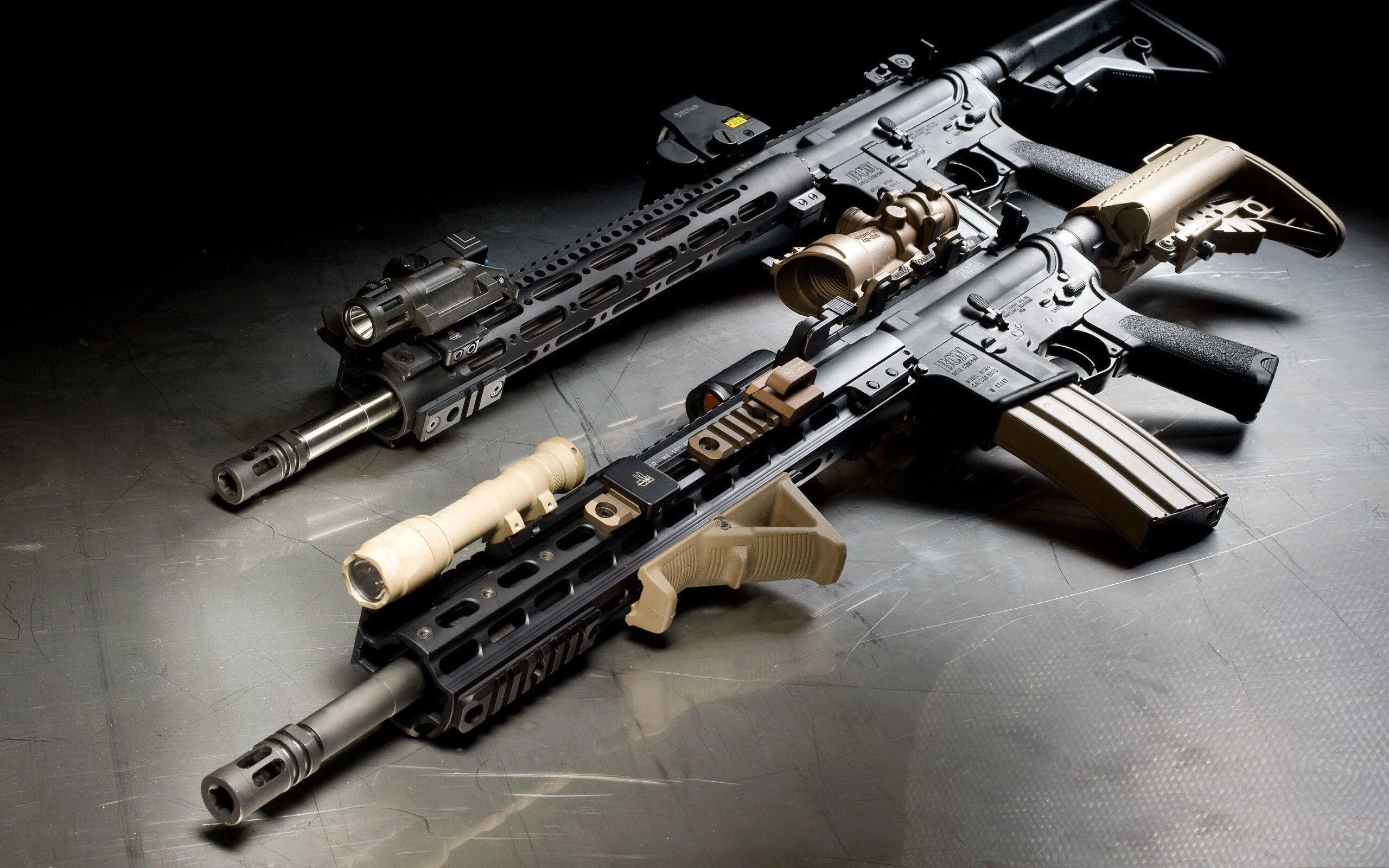
Carbine and rifle stock systems are not interchangeable labels
Before even comparing buffer weights, a buyer needs to know what stock system is on the rifle. A collapsible carbine stock and a fixed rifle stock can use different receiver-extension and buffer-system formats. A carbine-buffer chart should not be used to make assumptions about a fixed-stock rifle, and a stock shape in a photo is not a substitute for the actual manufacturer specification.
This is one reason generic parts advice can become expensive. Two rifles can both be AR-platform designs, yet have different receiver extensions, springs, buffers, barrels, or intended ammunition. They may look similar at a glance while needing different parts and professional guidance. A product description, the original manufacturer, or a qualified gunsmith is a more dependable source than assuming that every AR-pattern rifle accepts the same change.
It also matters when comparing a complete rifle against an upper. An upper does not by itself tell you what lower, receiver extension, stock, spring, or buffer will be used with it. That is not a missing detail to fill in from a forum post. It is a compatibility question that should be resolved by the maker or a professional who can see the full configuration.
Why ammunition and intended use still matter
Rifles are designed around the ammunition and use their makers expect them to handle. That does not mean a buyer needs to become an armorer. It means the buyer should keep the whole use case visible. A rifle that will spend its life on a known range with one common ammunition plan may be configured differently from a rifle intended for a specific competition format or chambering. The information that matters belongs in the original specification and the maker's guidance.
The right way to compare product listings is to look at the whole barrel and operating package. Note the chambering, barrel length, gas system, stock type, carrier information when supplied, and the stated purpose of the firearm. Then check whether the maker describes the rifle as a finished configuration. That process gives a buyer a far better picture than treating buffer weight as the deciding factor.
For competition, current event rules matter too. The CMP rulebook library and NRA competition rulebooks are the right sources when a rifle will be selected around a specific program. A configuration that feels sensible for broad range use may not be the best fit for a defined course of fire.
What buffer weight cannot tell you
A buffer label cannot promise reliability. Reliable function depends on the complete operating system, component quality, proper assembly, maintenance, ammunition, magazines, and the condition of the rifle. A buffer that is appropriate in one finished configuration may not be appropriate in another that looks similar online. If a rifle is having a function issue, change the question from “Which buffer should I buy?” to “What is the underlying cause?”
It also cannot guarantee a certain recoil feel. Descriptions such as smooth, soft, sharp, or flat are usually reporting how one rifle felt with one ammunition load, stock setup, muzzle device, barrel profile, and shooter. They can be useful impressions, but they are not a universal parts map. The most useful result for a buyer is a rifle that functions correctly and fits the intended shooting, not a collection of labels borrowed from another setup.
Finally, buffer weight does not make a rifle more accurate by itself. Accuracy comes from the barrel, chamber, ammunition, sights or optic, trigger control, support, and shooter. DRD's AR-15 twist-rate guide covers the same buying principle: one specification can help narrow the question, but a complete configuration and real verification provide the answer.

A better way to compare two rifle listings
When two rifles have similar prices or both use an adjustable stock, it is easy to let one small difference dominate the decision. Instead, compare the listings in an order that keeps the buyer focused on the job the rifle must do:
- Start with purpose: Is each rifle meant for broad range use, a specific competition format, a field role, or another defined job?
- Read the complete barrel specification: Compare chambering, barrel length, profile, twist rate, and gas-system information as one package.
- Confirm the stock system: Establish whether the rifle uses a carbine or rifle-style receiver extension before making any assumptions about buffer parts.
- Check the maker's operating details: Note the carrier, spring, or other system information when it is supplied, and do not fill missing details with a generic chart.
- Match the rifle to normal ammunition and distance: Choose around what the owner will actually shoot, not an imagined combination.
- Ask a professional about changes: If the question is driven by a function issue or planned modification, consult the manufacturer or a qualified gunsmith before changing operating parts.
This sequence makes a buying decision calmer and more reliable. It shifts the focus from chasing a heavier label to selecting a rifle whose parts, purpose, and maker's guidance agree with each other. That is usually the better long-term value, especially for a buyer who wants to spend more time shooting and less time correcting a mismatched setup.
How DRD helps narrow the choice
DRD's product range shows why complete configurations matter. The DRD-15 3-Gun Rifle combines a 16-inch .223 Wylde barrel, mid-length gas system, adjustable stock, and JP Silent Captured Spring inside a competition-focused package. The important point is not to copy one component from that rifle. It is to see how the components are selected together around a purpose.
The DRD CQT-15 and DRD-15 Garrison show other practical AR-platform configurations with different stated roles and equipment. For a custom order, the useful information to bring is straightforward: the cartridge, normal ammunition, expected distances, desired handling, sighting plan, and whether a specific competition rulebook applies. DRD can use that context to discuss a complete rifle instead of a single part label.
When the question is about a rifle that already exists, start with its manufacturer and the exact symptom or goal. For a new custom build, the custom-build contact page is the right place to describe the intended use before selecting parts. That conversation gives the builder the information needed to recommend a compatible package.

Bottom line
Standard, H, H2, and H3 are common labels for progressively heavier carbine-buffer formats, with nominal weights often listed near 3.0, 3.8, 4.7, and 5.4 ounces. They are useful terms to understand when reading a product listing. They are not a universal recommendation, a reliability diagnosis, or an accuracy upgrade.
Choose a complete rifle around the shooting you actually plan to do, and treat the maker's specification as the source of truth for its operating system. If a working rifle needs a change because of function, recoil feel, or compatibility, stop before ordering a part and consult the manufacturer or a qualified gunsmith. A clear diagnosis and a matched configuration are more valuable than a buffer chart used as a shortcut.
Frequently asked questions
What is the standard AR-15 buffer weight?
A standard carbine buffer is commonly listed around 3 ounces, but actual weights vary by manufacturer. The label alone is not enough to establish compatibility with a particular rifle, spring, bolt-carrier group, gas system, or ammunition plan.
What do H, H2, and H3 mean on an AR-15 buffer?
They usually identify progressively heavier carbine-buffer formats. Common nominal weights are about 3.8 ounces for H, 4.7 ounces for H2, and 5.4 ounces for H3, though a buyer should always verify the manufacturer’s actual specification before comparing parts.
Is a heavier buffer always better?
No. A heavier buffer is not a universal improvement. The right operating setup depends on the complete rifle and the ammunition it is intended to use. Changing parts without diagnosing the whole system can create a new problem instead of solving one.
Can I swap an AR-15 buffer myself?
A buffer system affects how a firearm cycles. If you are considering a change because of function, recoil feel, or a parts upgrade, consult the rifle manufacturer or a qualified gunsmith before making a modification. They can evaluate the complete configuration and recommend a safe, compatible path.
Does buffer weight make an AR-15 more accurate?
No. Buffer weight does not guarantee accuracy. Barrel quality, chamber, ammunition, optic or sights, trigger control, support, and the complete condition of the rifle have a much larger effect on practical precision.
Related posts
.223 Wylde vs. 5.56 NATO: Can You Shoot Both?
Can you shoot 5.56 NATO in a .223 Wylde barrel? Yes. See how .223 Wylde, 5.56 NATO, and .223 Remington chamber markings differ before you buy.
Read the guide
AR-15 Barrel Length: 16 vs. 18 vs. 20 Inches
Compare 16-, 18-, and 20-inch AR-15 barrels for handling, velocity, and competition use before choosing a rifle.
Read the guide