
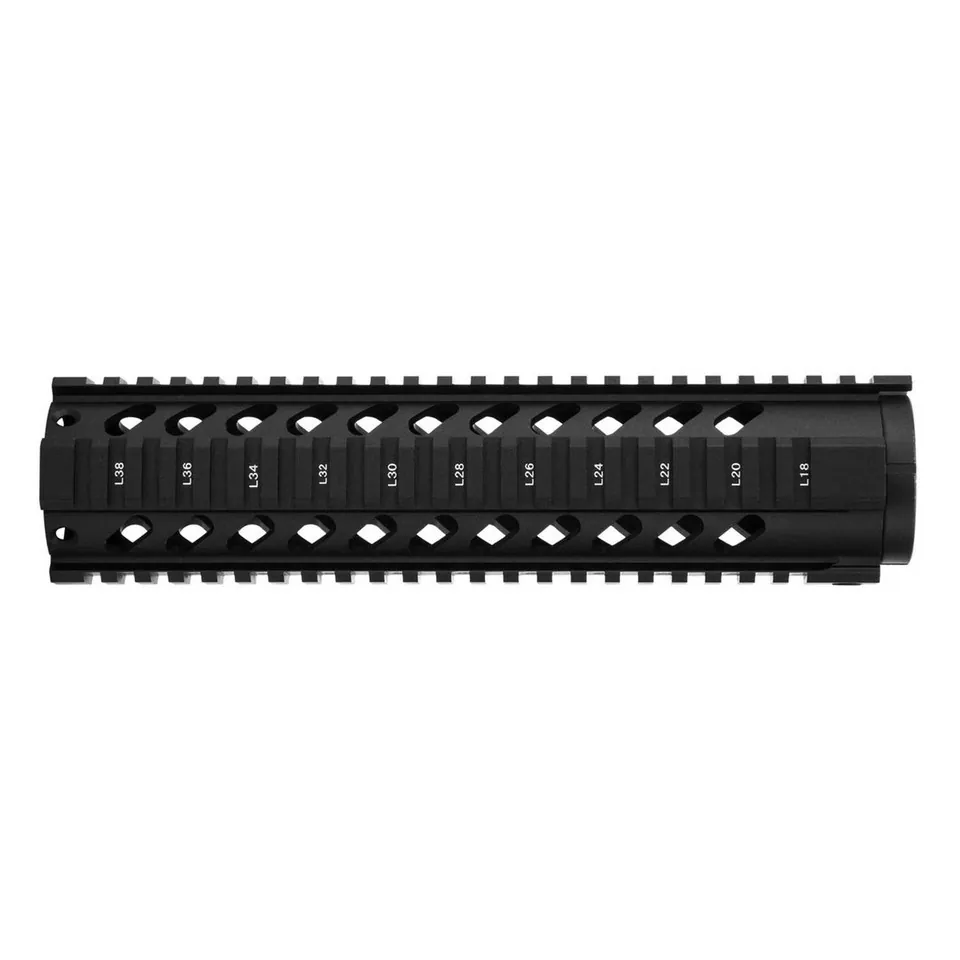
“Free-float” is one of the most common phrases in an AR-15 listing, yet it is easy to mistake it for a general quality score. It is not. It describes how the handguard is supported around the barrel. Understanding that relationship helps a buyer read an upper specification, compare a complete rifle, and avoid paying for features that do not serve the way they actually shoot.
The short answer
A free-float handguard attaches at the receiver and barrel-nut area while remaining clear of the barrel along its length. The shooter holds the handguard, mounts appropriate support equipment to it, and keeps incidental pressure from being transmitted through a traditional front attachment point. A classic drop-in handguard uses a different support arrangement, often involving the delta ring and front sight or gas-block area.
That design difference can be useful when a rifle is supported from a sling, bipod, bag, or the shooter’s hand. It does not turn a rail into a magic accuracy upgrade. The barrel, ammunition, upper assembly, optic or sights, shooting position, and shooter all still matter. The practical benefit is a more deliberate platform for building the complete rifle around a real role.
What “free-float” actually describes
On an AR-pattern rifle, the barrel is secured to the upper receiver. A free-float handguard surrounds the barrel and is held at the receiver-side mounting area instead of resting on the barrel or using a traditional front handguard cap. Brownells’ explanation of a free-floated AR-15 makes the useful distinction: on this platform, the phrase normally refers to the handguard, not a barrel with no related operating parts.
This matters because a handguard is not only a cover. It is where a shooter supports the rifle and where useful accessories may attach. If that structure bears directly on the barrel, outside pressure can become part of the barrel’s environment. A free-float design separates those jobs. It gives the handguard its own support path, while the barrel remains supported through its receiver connection.
The wording still needs some humility. “Free-float” does not erase the rest of an AR-pattern rifle’s architecture, and it does not promise a certain group size. It simply identifies a handguard arrangement that reduces one kind of outside influence on the barrel. A clear product specification tells you that arrangement. Good shooting and a sound complete rifle tell you what it means in practice.
Free-float versus drop-in handguards
A drop-in handguard is commonly associated with a traditional delta-ring and front-support arrangement. It can be a sensible fit for a rifle that is meant to retain that configuration. A free-float handguard is usually secured through a barrel nut or a maker-specific mounting system at the rear, which lets it extend around the barrel without the same front contact path.
The difference is not a referendum on older rifles. A traditional configuration can be exactly right when it suits the rifle’s intended format, equipment rules, or owner preference. The useful question is whether the handguard arrangement fits the job. A buyer who wants a modern upper with a sling, a light, a bipod, or limited support equipment may appreciate the clean mounting space and separation a free-float rail provides. A buyer preserving a traditional service-rifle layout may be pursuing a different, equally valid goal.
Free-float rails also vary substantially from one another. Their barrel nuts, anti-rotation features, internal clearance, length, outside profile, and accessory interfaces are not interchangeable just because the listing uses the same phrase. The manufacturer instructions for one Midwest Industries handguard are a good reminder that fit and assembly depend on the exact system. Treat a product page as a starting point, then verify the specific parts before buying or changing anything.
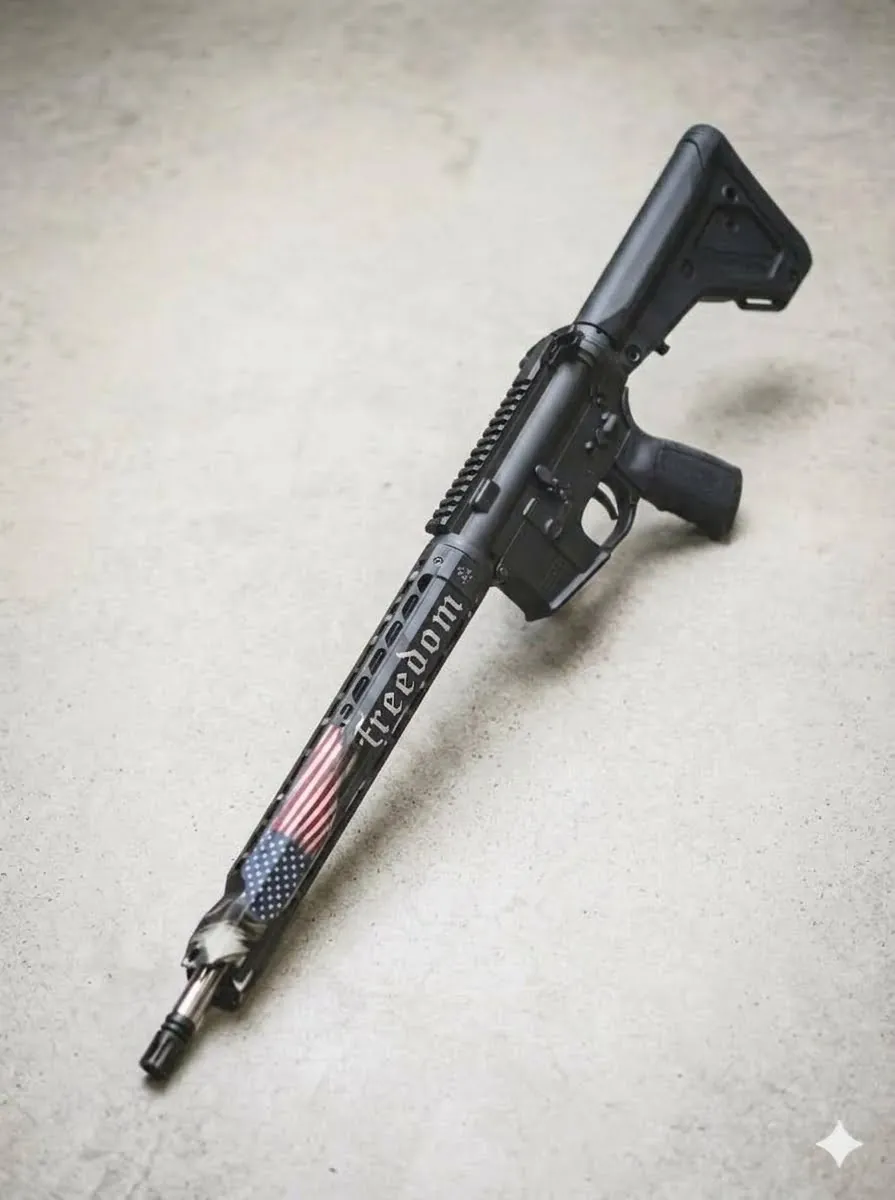
What a free-float handguard can help with
The value of a free-float handguard is most visible when it supports a purposeful setup. It provides a protected place to hold the rifle, a defined area for compatible accessories, and a structure designed to keep the handguard from contacting the barrel along its length. That can help a shooter keep the rifle’s support and accessory choices more consistent.
For a shooter using a sling or a bipod, the separation can be useful because load applied to the handguard is not intentionally routed through a traditional front contact point. For someone mounting a light, sighting accessory, or other permitted equipment, the rail can make placement more practical. For a buyer deciding between complete uppers, it adds a meaningful specification to compare beside the barrel, chamber, gas system, optic plan, and expected use.
What it does not do is solve an undefined problem. If a rifle has a shift in point of impact, a loose part, or a reliability concern, a handguard label cannot diagnose it. Start with safe handling, the manufacturer’s information, and a qualified gunsmith when the actual rifle needs evaluation. A free-float rail is a configuration choice, not a substitute for inspection or maintenance.
When a free-float rail is not the first decision
It is easy to focus on the rail because it is visible and offers a long menu of lengths, finishes, and attachment options. In many buying decisions, though, it should come after the larger questions are answered. Cartridge, barrel length, expected distance, competition rules, preferred optic, and the overall role of the rifle do more to define the configuration. Once those choices are clear, the handguard can be selected to support them.
That order keeps a buyer from paying twice for the same decision. A handguard chosen around an imagined accessory plan can become the wrong length or profile once the actual barrel, optic, sling, and shooting position are settled. A cleaner approach is to name the equipment that must be carried or mounted, then choose a compatible handguard with enough room, not the most room possible. A rifle that is comfortable, balanced, and easy to use will usually be more satisfying than one that is simply covered in attachment points.
There is also a practical ownership benefit to restraint. A simpler configuration is easier to inspect, carry, and explain when it needs service. Before any change, make sure the rifle is unloaded, keep the manufacturer’s documentation with the product information, and stop when a part fit or installation step is uncertain. The best purchase decision is the one that leaves the owner with a rifle they understand and a clear path to qualified help when they need it.
M-LOK, Picatinny, and free-float are different labels
Product listings can stack several terms together, which makes it easy to blur their meanings. Free-float describes how the handguard is supported. Picatinny and M-LOK describe ways that accessories can interface with the handguard. A rail can be free-float and use a continuous Picatinny section, M-LOK slots, or a combination of mounting surfaces.
M-LOK is an interface for attaching compatible equipment. Magpul’s M-LOK guidance shows why the accessory, hardware, and mounting surface must be treated as one system. The fact that a rail has open slots does not mean every slot needs an accessory. Add only the equipment that solves a real need, then keep the rifle balanced and comfortable to hold.
Picatinny space can be valuable for an optic, sight, or a compatible mount. M-LOK may offer a cleaner, lower-profile way to attach selected equipment. Neither label tells you whether the rail is the correct length, whether the barrel nut fits your upper, or whether the finished rifle will balance well. Those answers come from the whole specification and the shooter’s intended use.
Length, clearance, and the complete rifle
A longer handguard can offer more forward support area and more room for carefully chosen equipment. It can also change the rifle’s weight and balance. A shorter handguard can keep the front end more compact, but it may provide less usable space for the support hand or accessories. Neither is automatically right. Begin with how the rifle will be carried, shouldered, supported, and stored.
Clearance matters too. The handguard must work with the specific barrel, gas block, muzzle arrangement, and upper receiver in the configuration being considered. A buyer should never assume that a rail described as “AR-15” fits every AR-pattern rifle or every existing upper. Confirm the exact maker’s compatibility information. If an installed rifle is involved, have a qualified gunsmith check the actual components rather than making a decision from a photograph or a generic forum answer.
This is also why a complete upper can be appealing. A well-specified upper has already brought the receiver, barrel, gas-system components, and handguard together as a defined package. DRD’s 6.5 Grendel Upper, for example, identifies its 16-inch barrel, gas system, low-profile gas block, and 12-inch free-float M-LOK handguard as parts of one configuration. That gives a buyer a clearer foundation for choosing the lower, stock, optic, sling, and support gear around it.
Questions to ask before you buy
Use this short checklist to keep the decision grounded in the finished rifle:
- What is the rifle’s job? Start with broad range use, field use, a specific competition, or another real purpose.
- Is the system compatible? Confirm the upper, barrel nut, gas-block clearance, barrel profile, and the maker’s listed requirements.
- What length serves the setup? Compare support-hand room and accessory needs against the extra length and weight.
- What equipment is actually needed? Choose only compatible accessories that solve a real carrying, support, or sighting need.
- Who should do the work? If the change involves the barrel, gas system, or uncertain fit, use qualified professional support.
Those questions prevent a common mistake: buying a rail because it has the most slots, the longest advertised reach, or a familiar label. A good handguard is one that fits the exact upper and makes the rifle easier to use for its intended work. Everything else is secondary.
How DRD can help with the right setup
DRD builds complete rifles and uppers around a shooter’s actual role, rather than treating the handguard as an isolated upgrade. That matters because the barrel, gas system, upper, stock, trigger, optic, sling, and handguard all contribute to the same handling experience. Buyers comparing a purpose-built upper can begin with DRD’s 300 Blackout Upper, .350 Legend Upper, and the rest of the configured upper selection.
For an existing rifle that needs a handguard, rail, barrel, or support-equipment change, DRD’s AR-15 gunsmithing service offers a safer first conversation. Describe the current rifle, the parts in question, and the job the finished setup needs to handle. That makes it possible to check compatibility and avoid turning a straightforward improvement into an expensive correction.
Bottom line
A free-float handguard is a support structure that stays clear of the barrel along its length. It can give a complete rifle a cleaner path for purposeful support and compatible accessories, but it is not an automatic accuracy guarantee. Choose it as part of a complete rifle plan, confirm the exact compatibility requirements, and keep every added component tied to a real need.
Frequently asked questions
What is a free-float handguard?
A free-float handguard is supported at the receiver and barrel-nut area rather than bearing on the barrel along its length. It gives the shooter a protected place to hold the rifle and mount appropriate equipment while helping keep handguard pressure separate from the barrel.
Does a free-float handguard make every AR-15 more accurate?
No. It can reduce one source of outside pressure on the barrel, but it does not make a blanket accuracy promise. Barrel quality, ammunition, assembly, sighting system, support, and shooter fundamentals still determine the practical result.
Is M-LOK the same thing as free-float?
No. M-LOK is an accessory-mounting interface. A handguard can use M-LOK and be free-float, but the terms describe different things: one describes how accessories attach, and the other describes how the handguard is supported.
Should I install a free-float handguard myself?
A handguard change can involve the barrel, gas system, and manufacturer-specific hardware. Follow the maker’s instructions exactly or have a qualified gunsmith handle the work, particularly when fit, alignment, or an existing rifle’s function is in question.
What should I compare before buying a free-float handguard?
Confirm the upper and barrel-nut compatibility, the barrel and gas-block clearance, the desired length, the mounting interface, the weight, and the equipment the rifle actually needs. A compatible, purposeful setup matters more than choosing the longest rail or the longest feature list.
Related posts
AR-15 Barrel Length: 16 vs. 18 vs. 20 Inches
Compare 16-, 18-, and 20-inch AR-15 barrels for handling, velocity, and competition use before choosing a rifle.
Read the guide
Carbine vs. Mid‑Length Gas System: How to Choose
Carbine vs. mid-length gas system for a 16-inch AR-15: what each label means and the full rifle details to compare before you buy.
Read the guide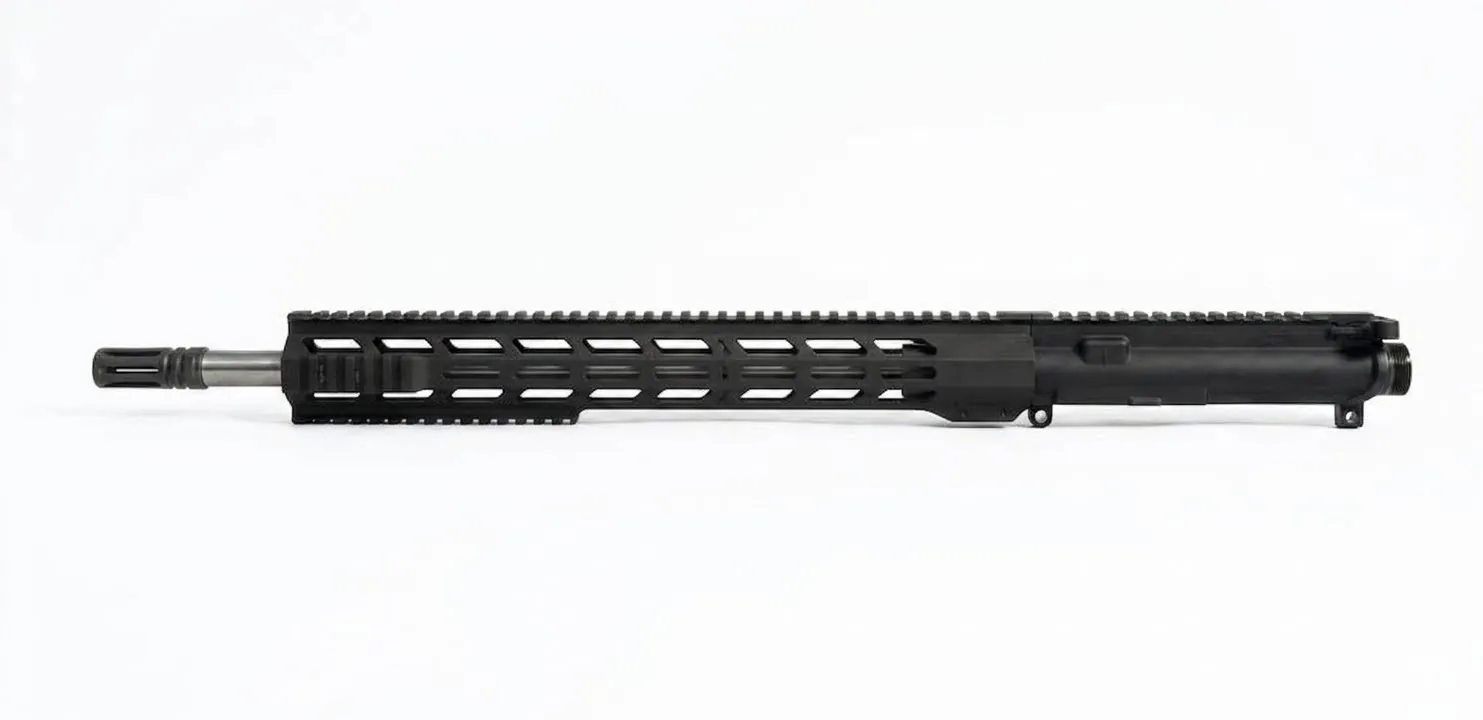
Best AR-15 Upper: How to Choose a Complete Upper
A practical guide to choosing a complete AR-15 upper around cartridge, barrel, gas system, handguard, and the rifle you plan to finish.
Read the guide