Mission Fit
Expected distance, movement, carry needs, and local requirements set the direction for the complete rifle.

A designated marksman rifle needs to carry a clear job from the first decision. DRD configures the DRD-10 DMR around precision, fit, and the practical details that support a serious .308 rifle.
A DMR should not begin as a loose list of premium parts. Distance, handling needs, sighting plan, carry requirements, and the person behind the rifle all influence the complete configuration.
For the DRD-10 DMR, that conversation starts with the real use case. A rifle expected to work from supported positions at longer distances may call for a different barrel length, handguard, optic, and balance than one that needs to move easily through vehicles or confined spaces. The point is to make each decision reinforce the same purpose.
DRD builds the rifle around that larger plan, then helps work through the details that affect repeatable use. The result should feel intentional in the hands, not merely impressive on a specification sheet.
Expected distance, movement, carry needs, and local requirements set the direction for the complete rifle.
A matched AR-10 upper and lower, cut barrel, and free-float handguard create a serious starting point.
Stock adjustment, trigger feel, optic placement, and balance need to support steady, repeatable input.
The DRD-10 DMR is a .308 configuration for law enforcement tactical use, built around a practical precision platform rather than a generic rifle package.
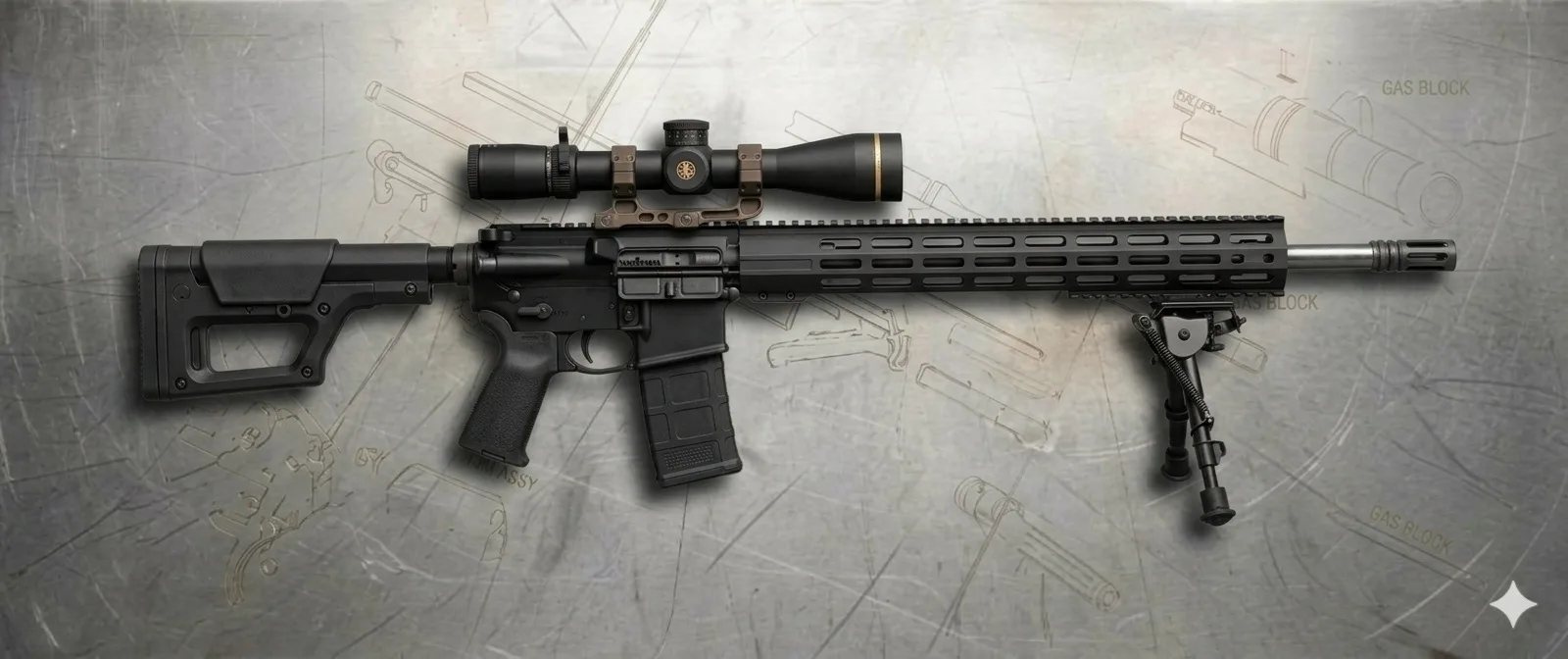
Configured for law enforcement tactical use, built around the accuracy, fit, and repeatability expected in the line of duty. Scope not included.
$2,525.00The DRD-10 DMR uses a matching AR-10 upper and lower tuned for a precision fit with the barrel. It is available with 16-inch, 18-inch, or 20-inch .308 barrel lengths, each with a 1:10 twist. Those choices give the conversation room to begin with the role the rifle must fill instead of forcing every buyer into one format.
A 12-inch or 15-inch Midwest Industries free-float handguard, low-profile gas block, Harris bipod, Magpul PRS Lite adjustable stock, and TriggerTech two-stage adaptable trigger complete the DRD starting configuration. These are not isolated upgrades. They work together to give the rifle a stable, purposeful foundation.
The scope shown in the product photo is not included. That makes the optic plan a key part of the order conversation, because glass, mount height, stock position, expected distance, and rifle balance all affect how a DMR is used.
The DRD-10 DMR can be configured with a 16-inch, 18-inch, or 20-inch .308 barrel. Each option changes the conversation about handling, overall length, support gear, and how the rifle will be carried or positioned. The right answer comes from the intended work, not from treating one length as the universal choice.
Start with the distances you expect to cover, the spaces where the rifle will be used or transported, and how much emphasis belongs on a compact package versus a longer supported setup. Then bring the optic, mount, handguard, stock, and bipod into the same discussion. That is how the rifle becomes coherent.
The DRD-10 DMR uses a matching AR-10 upper and lower tuned for a precision fit with the barrel, along with a Satern cut barrel. That is the mechanical foundation. It still needs to be paired with a sighting system, stock adjustment, trigger setup, ammunition plan, and field practice that allow the shooter to use the rifle consistently.
A Harris S-BRP bipod and free-float handguard give the DRD-10 a useful supported-rifle foundation. The bipod supports the rifle only when the shooter can build a stable position around it, so hand placement, optic height, stock length, and the location where the rifle is supported all matter. A well-chosen accessory cannot make up for a rifle that is poorly fitted to its role.
Because an optic is not included, it should be selected early rather than treated as an afterthought. Expected distance, reticle preference, elevation adjustment, mount height, eye position, and the ability to maintain a consistent cheek position all influence what will work well. DRD can help make sure the rifle and optic plan are pulling in the same direction before the order is final.
The Magpul PRS Lite adjustable stock and TriggerTech two-stage adaptable trigger are there to support fit and deliberate input. Stock position affects length of pull and cheek position. Trigger preference affects how naturally a shooter can apply a consistent press. Those choices should be discussed in the context of the individual shooter and the requirements that apply to the rifle.
A better first conversation keeps the rifle focused on the actual need and reduces the chance of making expensive changes after the build is complete.
Bring the practical details that define the assignment: the likely distances, whether the rifle will spend most of its time supported or moving, the kinds of positions available, and any rules or agency requirements that apply. Those details are more useful than a generic wish list because they tell DRD what the rifle needs to do.
Decide how the rifle will be sighted before finalizing the configuration. The optic, mount, stock, and eye position should support a repeatable presentation. If you already have glass in mind, share that early so its weight, height, and intended use can be considered alongside the rifle.
Choose between the available barrel and handguard lengths with the full package in mind. A compact choice can be useful where mobility is important, while a longer configuration may suit a different supported-rifle plan. The answer depends on the actual job, not on a universal preference.
Share what has worked and what has not worked on previous rifles. Details such as preferred stock adjustment, trigger feel, sling use, support-hand position, and equipment you already rely on give DRD a clearer way to refine the configuration around the person who will use it.
DRD builds rifles around the intended use, the shooter, and the configuration details that need to work together. The designated marksman rifle is no exception.
The DRD-10 DMR gives qualified buyers a real .308 starting point with the essential choices already considered. From there, the final setup can be discussed around barrel length, handguard length, optic plan, fit, and the practical requirements that matter before the rifle is ordered.
For a broader view of current DRD tactical configurations, visit the Tactical Rifles page. When you are ready to narrow down a DMR setup, bring the role, intended distances, and equipment priorities to the conversation.
Use requirements should guide the barrel, optic, stock, handguard, and support equipment.
Balance, cheek position, trigger preference, and control placement affect repeatable use.
Complete firearms ship to an eligible FFL dealer, with the transfer details discussed before ordering.
The DRD-10 DMR is configured for law enforcement tactical use, with a .308 AR-10 platform, a precision-fitted upper and lower, a cut barrel, adjustable stock, free-float handguard, bipod, and two-stage trigger. The final configuration should begin with the agency or buyer's real use requirements.
DRD offers the DRD-10 DMR with 16-inch, 18-inch, or 20-inch .308 barrel options. The useful choice depends on the distances, handling needs, optic plan, transport requirements, and policy or assignment details that apply to the rifle.
No. The scope shown in the product photo is not included. Discussing the optic plan before ordering helps make sure the mounting, stock fit, expected distances, and rifle balance support the same job.
Yes. DRD can discuss barrel length, handguard length, stock fit, trigger preferences, the intended optic, and the specific role the rifle needs to fill before the order is finalized.
Complete firearms ship to an eligible FFL dealer, where the buyer completes the required transfer process. DRD can discuss the practical details before the order is placed.
DRD works through the intended use, parts, legal transfer path, and realistic build timing before the rifle is built.
Fredericksburg-area pickup can be scheduled by appointment after required paperwork.